Integrated Theatre Commands: India’s most ambitious military reform
Background
Modern wars are rarely fought by individual services working in isolation. Victory today depends on speed, coordination and the ability to bring land, air and naval power together in a single, unified response. As India faces increasingly complex security challenges across multiple fronts, the limitations of its traditional command structure have become more apparent. The move toward Integrated Theatre Commands is therefore not merely an administrative reform; it reflects a deeper strategic shift in how India plans to prepare for, deter and fight the wars of the future. For decades, the Indian military has operated under a structure that many experts describe as a "siloed" system. If you look at the map of India’s military geography, you will find 17 different commands; seven for the Army, seven for the Air Force, and three for the Navy. Many of these commands share the same geographic responsibilities but are headquartered in different cities, sometimes hundreds of kilometers apart.
The recently executed ‘Operation Sindoor’ by the Indian Armed Forces highlights the evolving character of India’s military preparedness and joint war-fighting capability. The operation marked a significant demonstration of integrated defence strategy, enabling coordinated action that reportedly struck eleven Pakistani bases within a single operational window. It illustrated how modern conflict increasingly relies on seamless co-ordination between services, precision planning and the ability to operate in constrained but highly dynamic areas of conflict beyond conventional battle lines.
In a world where wars are won in minutes through lightning-fast digital and kinetic coordination, this fragmented approach is becoming a relic of the past. Today, India is on the cusp of its most significant defense reform since Independence: the creation of Integrated Theatre Commands (ITCs).
As Chief of Defence Staff General Anil Chauhan recently emphasised, the creation of these commands will "kick-start the next generation of reforms," shifting the military from a service-specific mindset to a unified "One Force" doctrine.
What exactly are Integrated Theatre Commands?
To put it simply, an Integrated Theatre Command is a unified command structure where all assets of the Army, Navy, and Air Force in a specific geographical theater are placed under a single operational commander.
Currently, if a conflict breaks out on the northern border, the local Army commander and the local Air Force commander must coordinate through their respective chains of command. Under the new "Theaterisation" model, a single "Theatre Commander" will have the authority to deploy tanks, fighter jets, and naval assets simultaneously.
Key Committee recommendations: The Kargil Review Committee, 1999 recommended creation of integrated theatre commands and Chief of Defence Staff to improve joint operations and address coordination failures during the Kargil War.
The Shekatkar Committee, 2016 proposed three integrated theatre commands (Western, Northern, and Southern) to enhance tri-service synergy and resource efficiency.
The proposed plan involves moving away from the 17 functional commands toward three or four integrated ones. According to some reports, there will be three theatre commands:
A Maritime Theatre Command (focused on the Indian Ocean Region, primarily aimed to be located at Karwar in Karnataka, with some reports indicating Thiruvananthapuram or Coimbatore as alternatives).
A Western Theatre Command (focused on the border with Pakistan, likely to be headquartered at Jaipur).
An Eastern/Northern Theatre Command (focused on the border with China, likely to be headquartered at Lucknow).
The Economic Times writes that the goal is to ensure that the Service Chiefs (Army, Navy, Air Force) focus on "Force Generation", which means training and equipping their men, while the Theatre Commanders focus on "Force Application," or the actual business of fighting a war.
The ‘why now?’: Understanding the necessity
The shift isn’t just about administrative tidiness; it’s a strategic necessity born out of the changing nature of modern warfare. As noted by The Geostrata, theatarisation is about "synergy."
In the 1999 Kargil War, the delay in coordinating air support with ground operations was a wake-up call. More recently, the 2020 standoff in Eastern Ladakh highlighted that when facing a technologically advanced adversary like China, which restructured its own military into five theater commands in 2016, India cannot afford a fragmented response.
As Air Vice Marshal Dr. Arjun Subramaniam (retd) argued in his analysis for the Observer Research Foundation (ORF), integration is the prerequisite for effectiveness. “We no longer live in an era where the Army fights on land and the Navy fights at sea in isolation. Modern conflict involves ‘Multi-Domain Operations’, where space, cyber, and electronic warfare are woven into traditional combat. You cannot manage these domains through 17 different windows.”
Why has this taken so long?
If the benefits are so obvious, why didn’t India do this earlier? The answer lies in a mix of institutional inertia, service-specific anxieties and a lack of political-military overarching structure.
The "Big Brother" Syndrome: Historically, the Indian Air Force expressed concerns that ‘theaterisation’ might result in its limited assets being distributed and "subordinated" to Army commanders. In 2021, the IAF spelt out concerns on theaterisation. The IAF has long advocated that "air power is global," and dividing it into specific theaters might dilute its flexibility.
Structural vacuum: Until 2019, India lacked a Chief of Defence Staff. Without a single point of military advice to the government, there was no "referee" to settle inter-service disputes. The 2019 Cabinet approval for the CDS post (as detailed in PIB archives) was the "Big Bang" reform that finally provided the engine for theaterisation.
The vision of the current government: The Modi government has shown a distinct appetite for "hard" defense reforms that were previously considered "too sensitive." By appointing the late General Bipin Rawat as the first CDS, the government signaled that the status quo was no longer an option. According to The Times of India reports, the current CDS, General Anil Chauhan, is now pushing to operationalise these commands before his retirement, indicating a sense of political urgency.
Modernisation
It is a mistake to view the Integrated Theatre Commands purely as a reshuffling of desks. It is, at its heart, a Modernisation Reform.
Modernisation isn't just about buying a Rafale jet or an S-400 missile system; it’s about the architecture that controls them. The grant of command authority to the CDS is a major step in building a military that is "tech-agnostic" and "network-centric."
The reform integrates:
Logistics: Instead of three services running three different supply chains for fuel, ammunition, and medical supplies, a unified command creates a "Joint Logistics Node." This saves billions of rupees and slashes response times.
Space and cyber assets: With the creation of the Defence Cyber Agency and Defence Space Agency, these assets can now be plugged directly into theater commands to provide real-time satellite intelligence to the commander on the ground.
Indigenous production: As part of the "Atmanirbhar Bharat" (Self-reliant India) initiative, theatre commands will provide a clearer, unified requirement for weapons, preventing the duplication of research and procurement.
The road ahead: racing against time
Some strategic experts describe the current phase as "racing against time." The transition is complex. It involves rewriting "Rules of Business," changing the seniority structures of officers, and, most importantly, changing the culture of the forces.
As Maroof Raza, who passed away recently, had pointed out that the "Theatre Command debate" isn’t just about military efficiency; it’s about ensuring that India is prepared for a "Two-Front War" scenario. In such a crisis, India won't have the luxury of time to sit in committee meetings to decide which service does what.
The move toward Integrated Theatre Commands is the "Rubicon" of Indian defence. It marks the transition of the Indian Armed Forces from a post-colonial regional force into a modern, agile and integrated global military power.
By merging the unique strengths of the Army’s grit, the Navy’s reach, and the Air Force’s precision, India is finally forging a "Unified Sword." While the hurdles of "service parochialism" remain, the momentum provided by the CDS office and the current government's vision suggests that the question is no longer if India will theaterise, but how fast it can get it done.
In the words of CDS Gen. Chauhan, “This is not just a change in structure, it is a change in the very DNA of how India defends its sovereignty.”
India currently has 17 single-service commands Additionally there are 2 tri-service commands: The Northern command would cover the 3,488-km Line of Actual Control (LAC) with China. Approximate strength:
Integrated Theatre Command: Strategic Synergy between the Armed Forces of India
On Road to Integrated Theatre Commands India’s Theatre Command – Challenges and Issues India’s Biggest Military Reform Since Independence: Theatre Commands Incoming... 🇮🇳⚡ India's Joint Theatre Command ‼️ #IndianArmedForces are finalizing the blueprint for Theatre Commands and it will take 12-18 months to take concrete shape on the ground after the final approval is given. pic.twitter.com/iwvfgeZFEo 🎙️ Reforms, strategies, modernization, and innovations in the Armed Forces for a Viksit Bharat – all revealed here!
Introductory Memo
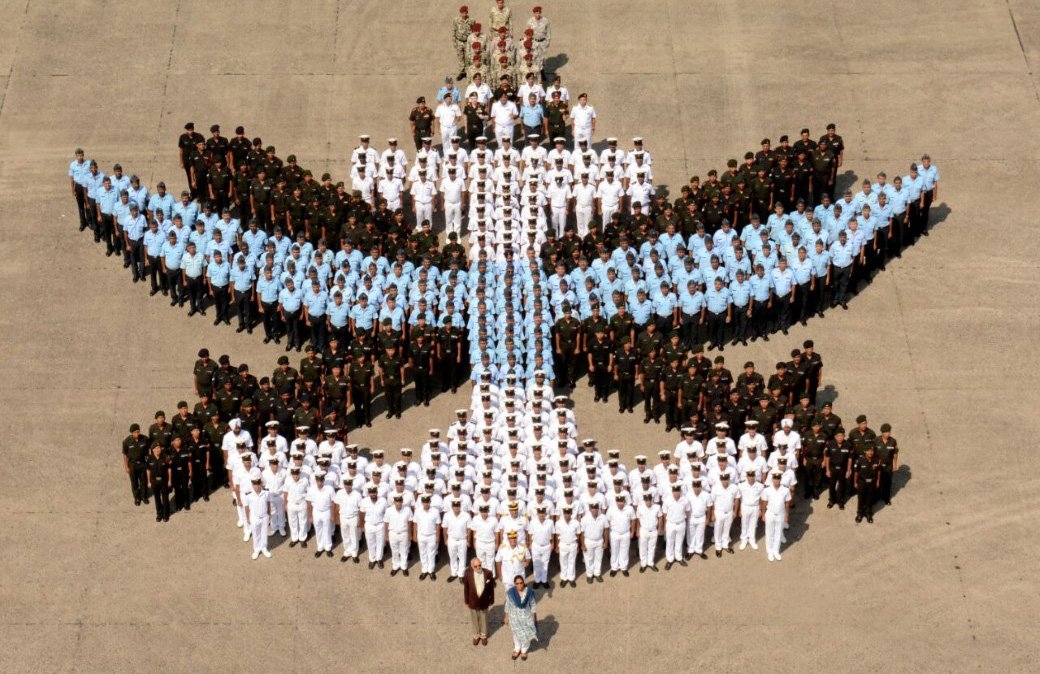
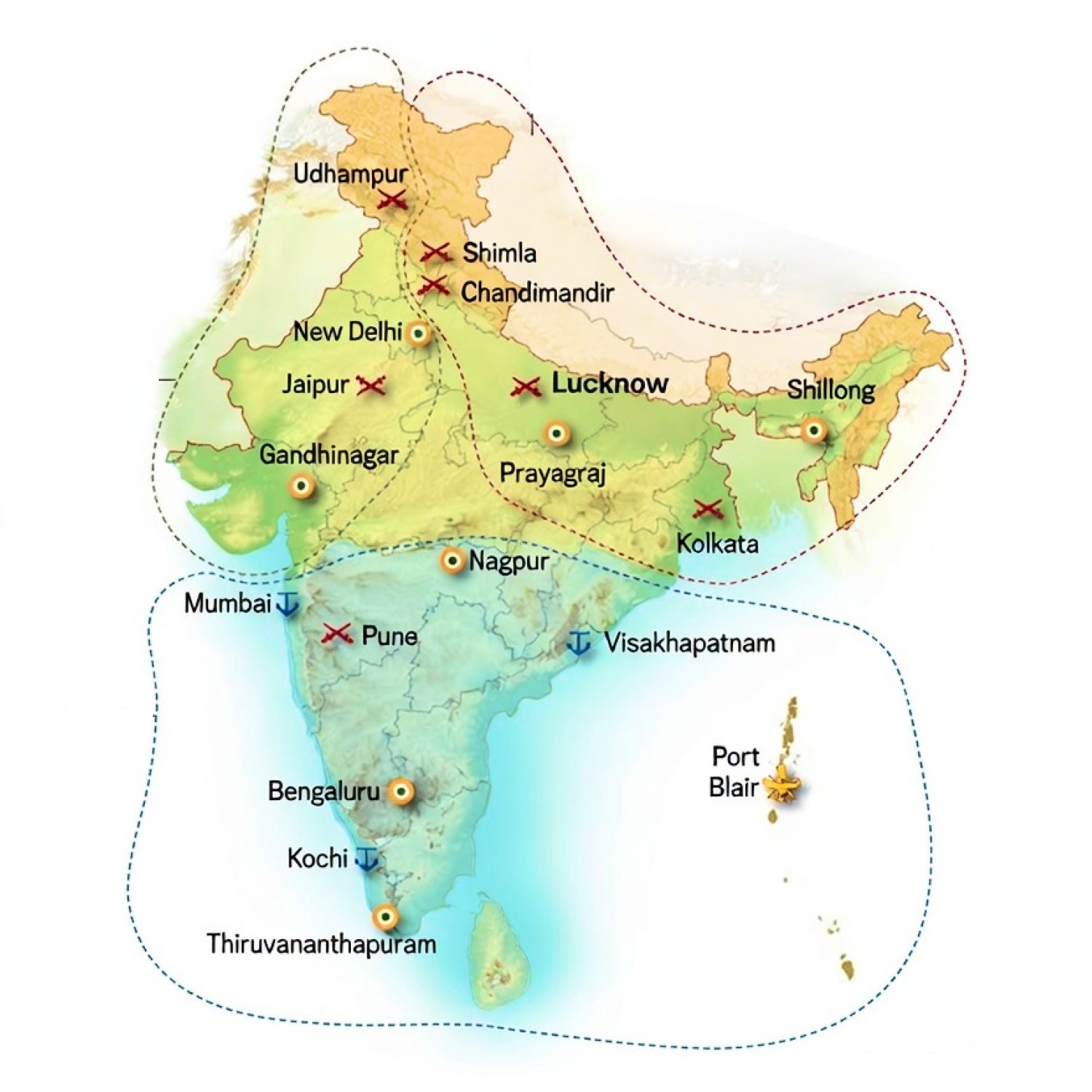
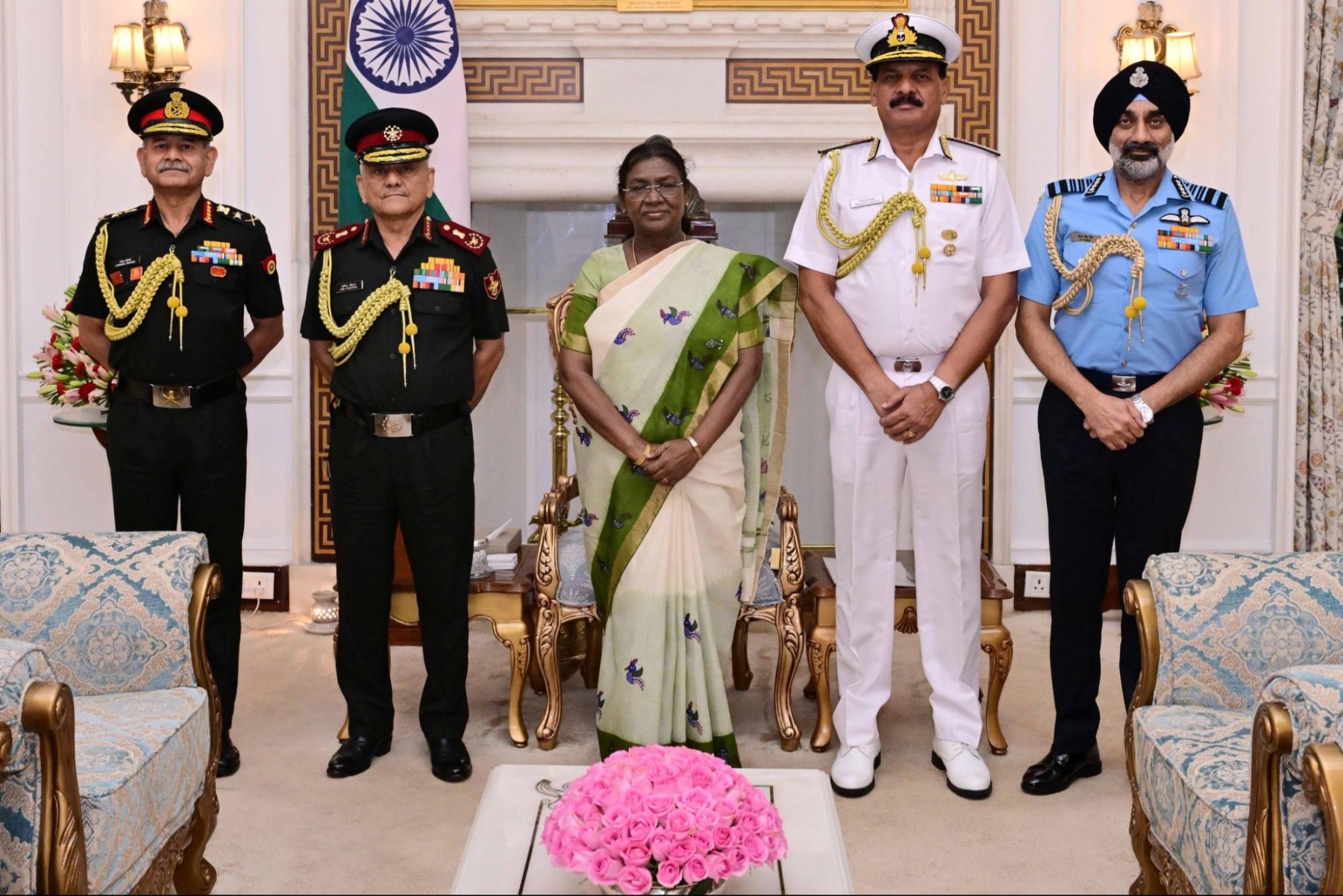
Photo Credit: ANI / X
Source: Wikipedia
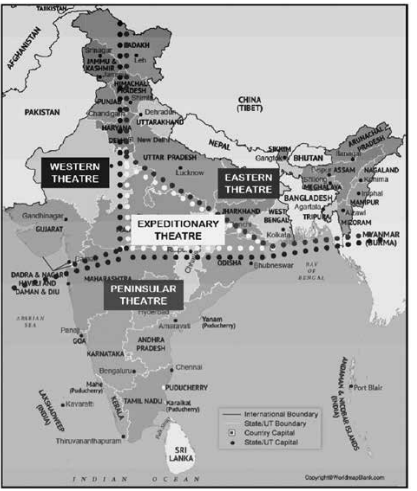
Proposed Theatre Commands (widely reported plan)
By Vinayagamurugan P
An integration of armed forces and strategic synergy between the armed forces of India is of paramount importance for India’s National Security and Interest.
By Lt Gen Anil Ahuja (Retd.)
Integration and theaterisation of the armed forces is a politico-military endeavour, to bring about fundamental changes in the national security realm, which will help the country effectively tackle the entire spectrum of conflict. It will enable the conduct of multidomain operations, fusing emerging technologies with conventional warfighting, in an India-specific environment.
By Neeraj Singh Manhas
Larger theatre structures allow for more flexible military power collaboration, whereas inter-service integration enables centralised joint planning and distributed military power application.
> Future wars will not wait for files to move between Army, Navy and Air Force
> Modern conflict is multi-domain... land, sea, air, cyber, space all at once
> Separate command structures slow… pic.twitter.com/SamP1ZzDIJ
Contours of Indian Armed Forces Joint Theatre Command is ready and awaits GOI nods before tweaks. Theatre in Military means 1 Command under which all Forces will work like One.
One each for #China & #Pakistan & one for Sea based threat. It will… pic.twitter.com/jjmduMytOd
An exclusive conversation with the Chief of Defence Staff, Gen Anil Chauhan, is premiering now.
Tap the link to listen to this Exclusive Interview on #Podcast… pic.twitter.com/g7Clr9QKy6
#/media/File:Indian_Armed_Forces_(Triservices)_logo_at_National_War_Memorial.jpg)